Making and Canning Homemade Salse from Fresh Ingredients
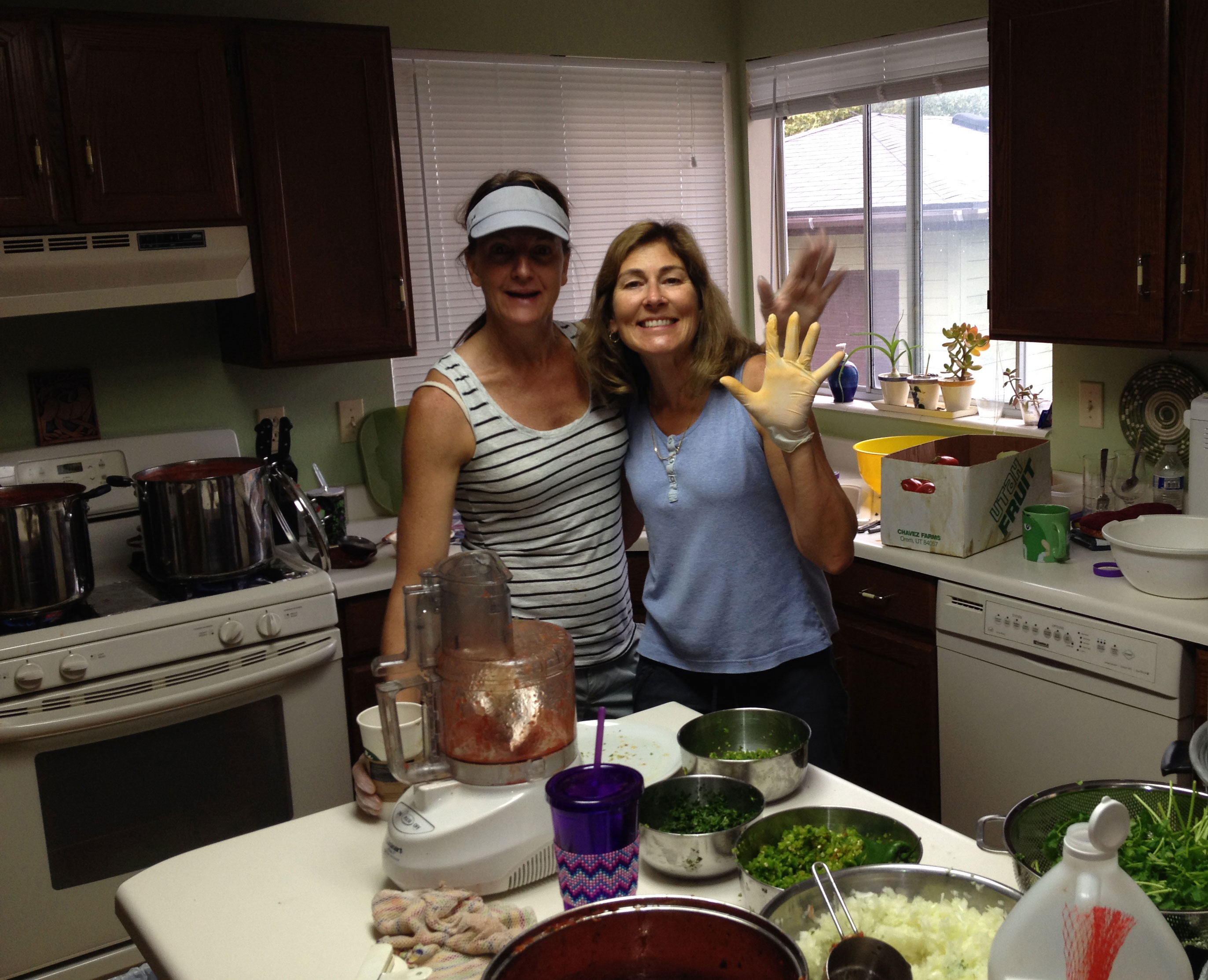
Karen and her best friend Sue!
It’s October and canning season is full on at our house, to date my wife has canned (en conserve) a plethora of items and our storage shelves are filling up nicely. Through the winter we will be enjoying canned dill beans, sweet pickles, tomatoes, and peaches. Thanks to Friday and Saturdays canning efforts, salsa has now been added to the storage shelves.
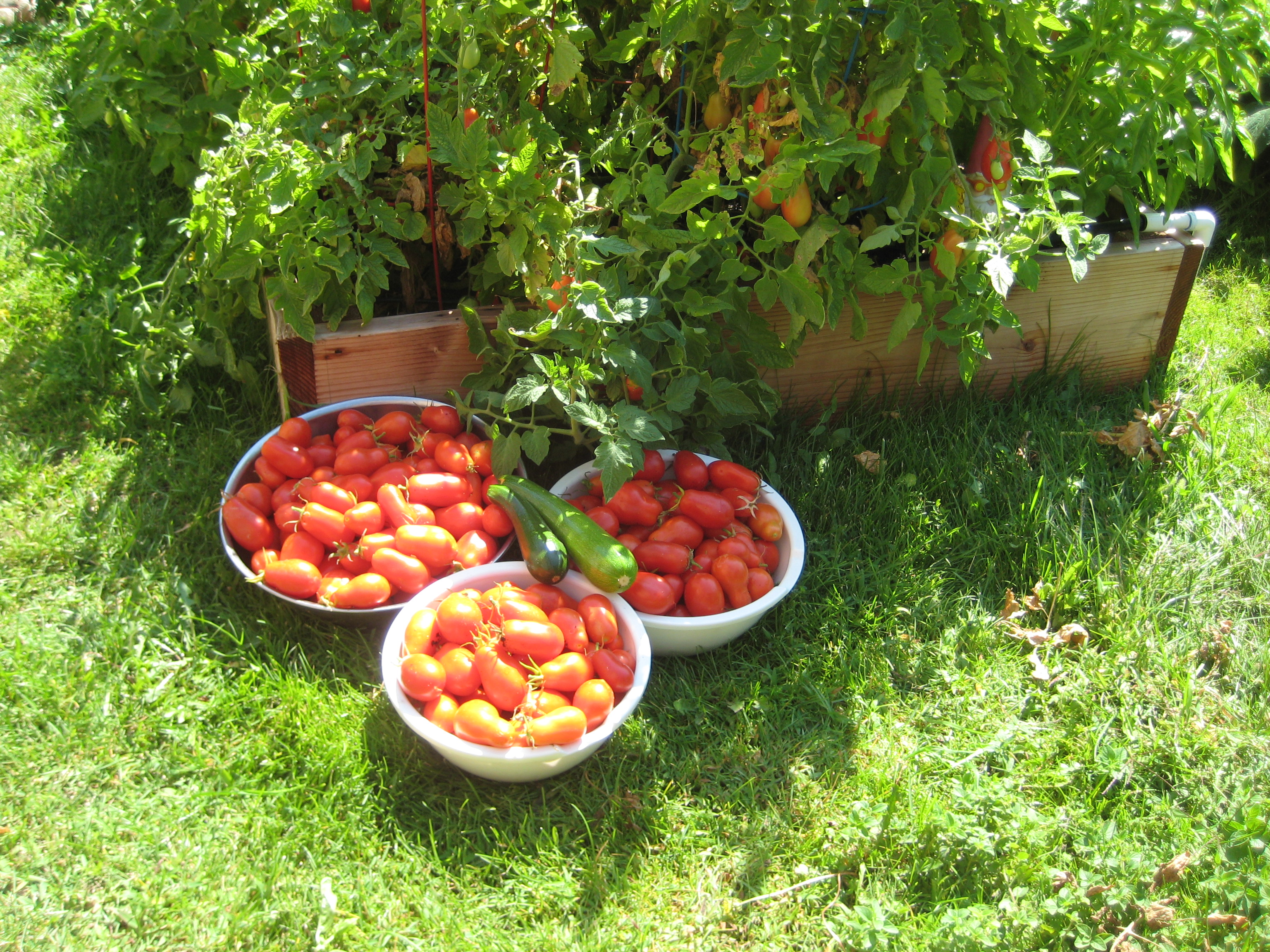
These two industrious women made a trip to the Murry farmers market (le marché de producteurs) last weekend in preparation for this weekends canning event. The bounty they returned with included 5 boxes of tomatoes, a box of chili peppers, a bag of onions, and cilantro. Be aware that these items do not make up the total ingredient list for salsa.
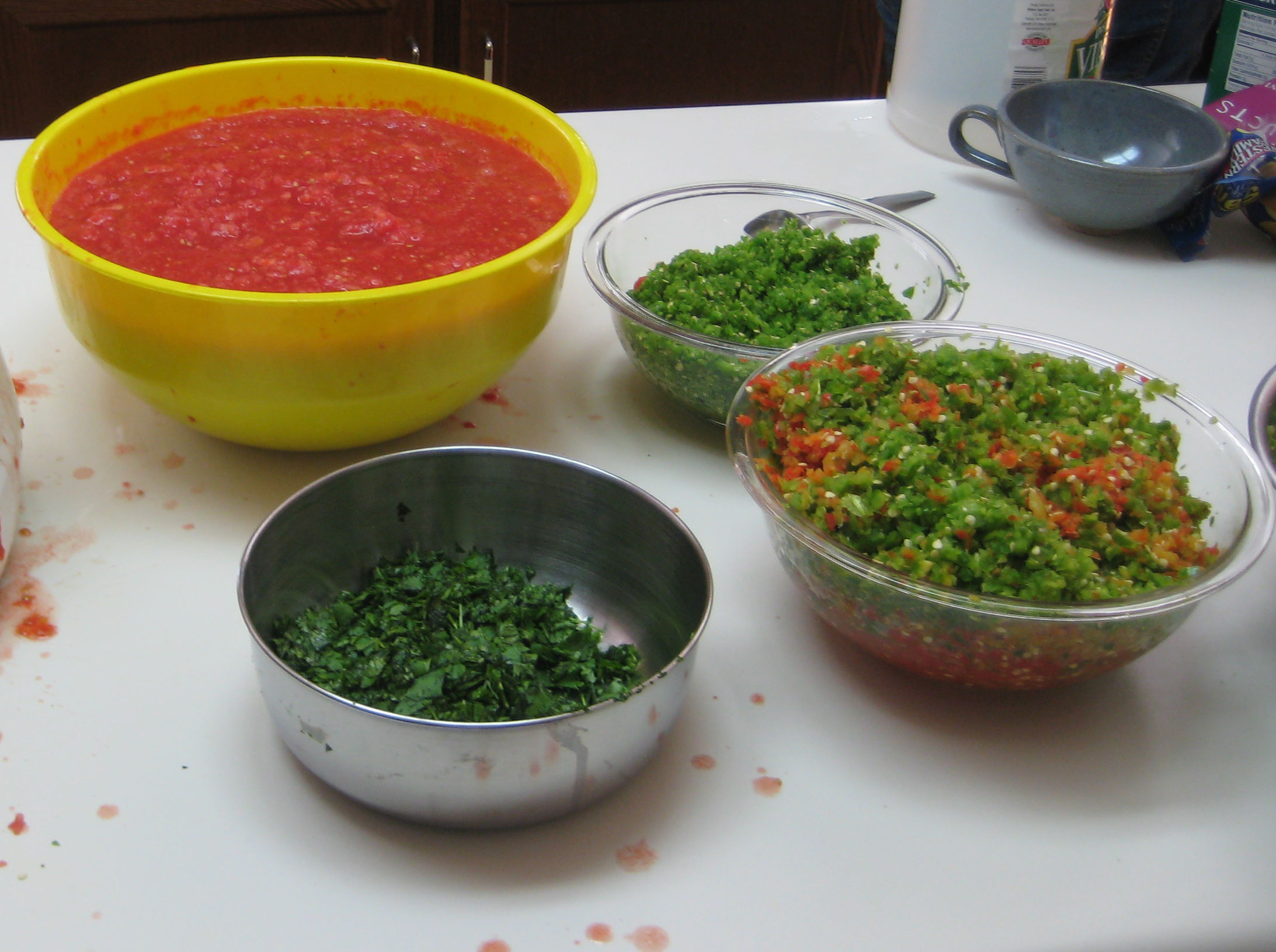
Pureed ingredients read to be mixed.
Getting an early start Saturday morning, the tomatoes were blanched and then pureed along with all of the other ingredients. The site of the fresh vegetables separated into the nonreactive bowls, combined with the memory of how last years salsa tasted had my taste buds at full attention.
Once pureed, and the kitchen counter thoroughly splattered, these ingredients where then mixed together (Ces ingrédients ont été ensuite mélangés ensemble) into large cooking pots and placed on the stove to simmer. Kitchen chemistry at its finest, the addition of canning salt firms the texture of watery vegetables and concentrates their flavors.
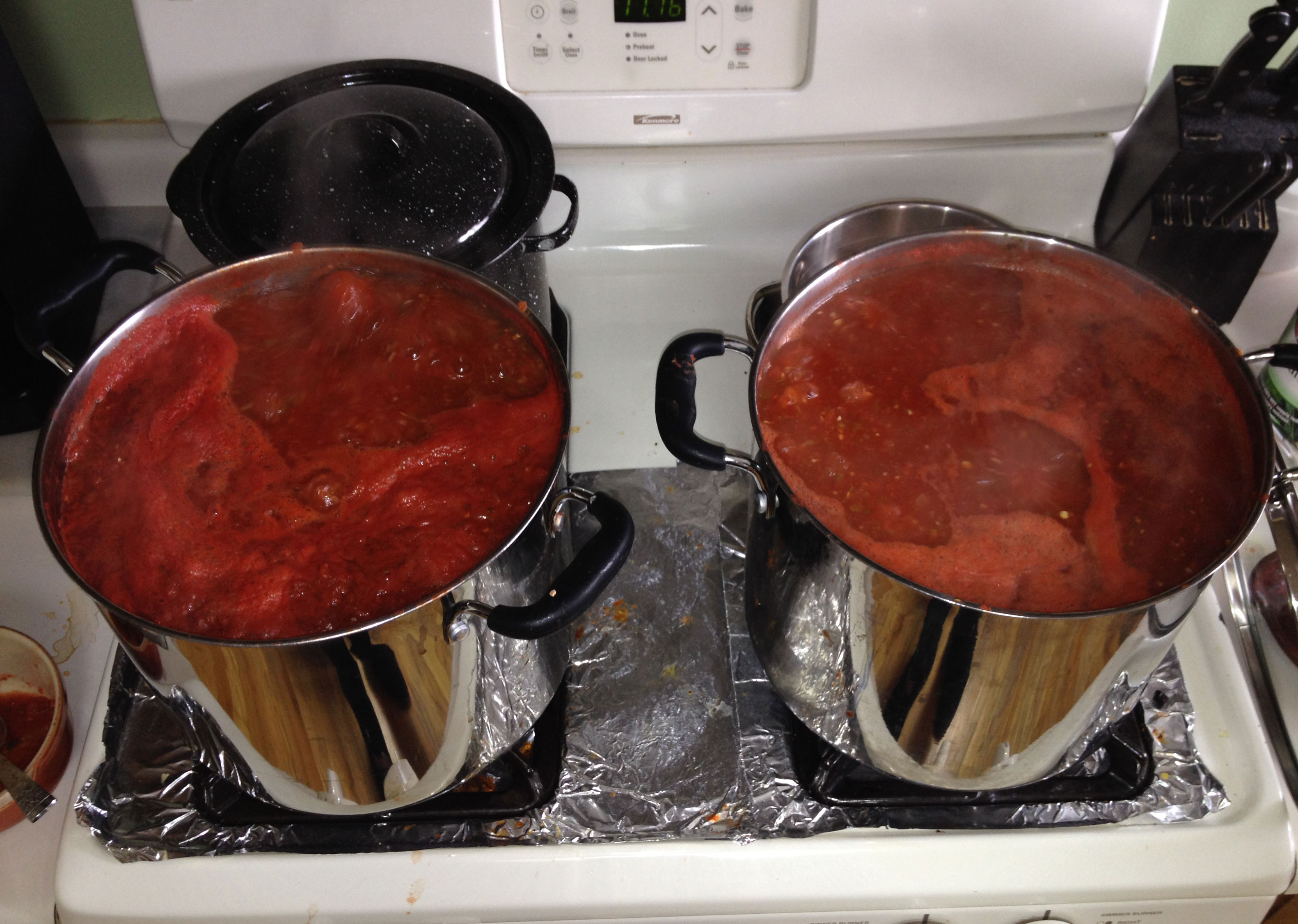
The sauce as it gently simmers
Canning requires special equipment and a lot of heat and steam. Undoubtedly, innumerable kitchen stoves have been ruined in homes in the pursuit of preserving food stores. Once the excess water has been cooked off, the sauce is allowed to cool, sampled and additional ingredients added to get the taste just right.
Would you like to taste our salsa?
Voulez-vous goûter à notre sauce froide à base d’oignons, de tomates et de poivrons?

Ladling the cooked down sauce into jars.
The sauce is now ready to be placed in the mason jars and sealed with a two piece lid system. New mason jar lids are boiled to sterilize them, they are removed from the boiling water with a magnet that is attached to the end of a rod (one of those special equipment items previously mentioned). Vinegar is added to the jars to preserve the food contents and these sterile lids are placed on the rim of the mason jar. The threaded metal ring is hand tightened, the trick here is to not tighten this ring to tight which may prevent air from venting during the boiling-water process.
Canning (conditions de mise en conserve) is the process of preserving food by sealing it in airtight containers and then heating the containers after they have been filled. We use a pressure canner for this boiling-water processing, another process step requiring a lot of heat and steam. This boiling-water process heats the jars and raises the vapor pressure of the liquid inside the mason jars. As the vapor pressure rises, air is forced out of the jar (remember the to tight of lid mentioned earlier?). Utah is a high altitude area, and canning here requires additional time in the pressure canner.
Once the required time elapses the mason jars are removed and allowed to cool. As the jar and its contents cool, a vacuum forms as the vapor pressure drops inside the jars. The drop in vapor pressure pulling the lid down from this inside, in addition to the atmospheric pressure pushing down on the lid from the outside, creates an air tight seal as the rim of the jar presses into the softened adhesive on the lid. It is a real joy to experience this and hear the ping as this seal is created.
canning – conditions de mise en conserve
canning factory – fabrique de conserves or conserverie
canning industry – l’industrie de la conserve or conserverie
canned vegetables – en conserve
farmers market – le marché de producteurs
These ingredients where then mixed together – Ces ingrédients ont été ensuite mélangés ensemble.
Would you like to taste our salsa?
Voulez-vous goûter à notre sauce froide à base d’oignons, de tomates et de poivrons?
Comments:
To leave a comment to this post click here, and thank you for contributing, your thoughts are important.